NRCS Cost Share in South Carolina: What Does It Pay per Acre?
NRCS cost share in South Carolina pays the rate a state payment schedule lists for each practice. For the mechanical brush, understory, slash and habitat rows in this guide, the FY26 EQIP schedule lists $40.29 to $554.05 per acre. You apply at your local NRCS field office, and NRCS plans and approves the practice before work begins.
In this guide, the rows for historically underserved producers run higher, up to $664.86 per acre. Every rate here comes from NRCS’s own South Carolina schedules, linked below. This guide is general information, and your field office has the final word on your plan.
What does NRCS cost share pay per acre in South Carolina?
Payment amounts can vary between states, as NRCS’s payment schedules page notes. The South Carolina rates here come from the FY26 EQIP payment schedule and the FY26 CSP payment schedule.
Each figure is what a schedule lists per acre for one practice component. The schedule pays for the practice and its component, not for a machine. NRCS decides in your plan which component fits your ground.
The table pulls the mechanical brush, understory and slash rows from both schedules, plus the 645 and 647 habitat rows. HU marks the row listed for historically underserved producers.
| Program | Practice | Component the schedule lists | Per acre |
|---|---|---|---|
| EQIP | 666 Forest Stand Improvement | Heavy Equipment, Mechanical Treatment | $554.05 |
| EQIP | 666 Forest Stand Improvement | HU row, Heavy Equipment, Mechanical Treatment | $664.86 |
| EQIP | 666 Forest Stand Improvement | Light Equipment, Mechanical Treatment | $54.89 |
| EQIP | 314 Brush Management | Mechanical Control, Less Than or Equal to One Acre | $403.61 |
| EQIP | 314 Brush Management | HU row, Mechanical Control, Less Than or Equal to One Acre | $484.33 |
| EQIP | 314 Brush Management | Mechanical Control, Hand Application | $59.63 |
| EQIP | 384 Woody Residue Treatment | Mechanical and Manual Control for Slash, Less Than 5 Tons per Acre | $121.13 |
| EQIP | 384 Woody Residue Treatment | Slash, 5 to 15 Tons per Acre | $471.90 |
| EQIP | 645 Upland Wildlife Habitat Management | Management of Mid-Successional Habitat Conditions | $46.40 |
| EQIP | 645 Upland Wildlife Habitat Management | Establishment of Seasonal Forage or Cover for Wildlife on Non-Cropland | $293.17 |
| EQIP | 647 Early Successional Habitat Development-Management | Mowing | $40.29 |
| CSP | 314 Brush Management | Mechanical Control for Large Shrubs, Medium Infestation | $295.29 |
| CSP | 666 Forest Stand Improvement | Heavy Equipment, Mechanical Treatment | $554.05 |
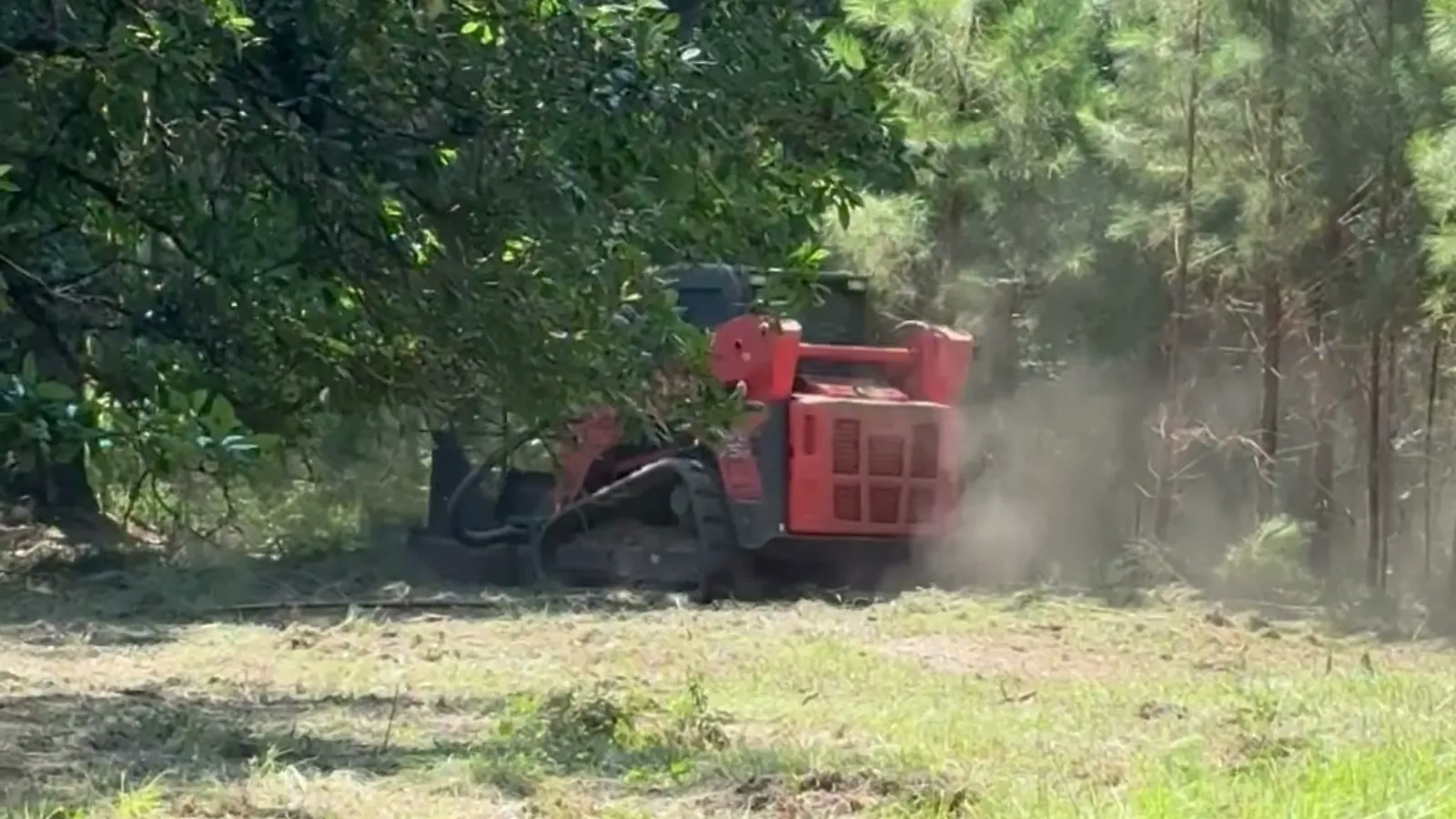
Our hardwood understory clearing grinds saplings and vines under the trees you keep, and the mulch stays on the ground. Which row, if any, matches that kind of work on your land is for NRCS to decide.
The schedule rate is what NRCS pays you. A contractor’s price for the same acre is a separate number. Our brush clearing cost guide covers published contractor prices.
Which NRCS practices cover brush, understory and slash work?
Forest Stand Improvement is practice 666. NRCS’s national standard for Code 666 defines it as the manipulation of tree and shrub species composition, structure, or density. The aim is the forest conditions you want. Its listed purposes include improving wildlife habitat and reducing forest wildfire hazard.
The South Carolina EQIP schedule lists 666 heavy equipment mechanical treatment at $554.05 per acre. Light equipment mechanical treatment lists at $54.89. Under the national standard, the written plan names the treatment method and the tree species to be retained. It also times the work around seasonal factors.
The standard says to consider retaining slash and woody debris on site for nutrient cycling. It calls for controlling and minimizing rutting, compaction, soil erosion and damage to desirable residual vegetation.
Brush Management is practice 314. The EQIP schedule lists mechanical control on one acre or less at $403.61 per acre, and hand application at $59.63. For a bigger area, ask your field office which 314 row applies. The CSP schedule lists mechanical control for large shrubs at medium infestation at $295.29 per acre.
Woody Residue Treatment is practice 384, and its slash rows step up with tons per acre. Mechanical and manual control for slash under 5 tons per acre lists at $121.13 per acre. Slash at 5 to 15 tons per acre lists at $471.90.
Brush that has swallowed a field edge is the work of our brush clearing. We mulch or mow it in place.
What do the 645 and 647 wildlife habitat rows pay?
Upland Wildlife Habitat Management is practice 645. The EQIP schedule lists management of mid-successional habitat conditions at $46.40 per acre. It lists establishment of seasonal forage or cover for wildlife on non-cropland at $293.17 per acre.
If you hunt, that forage row may catch your eye. Whether a planting on your land fits it is NRCS’s call in your plan. Either way, our food plot establishment work uses a tractor and a no-till drill.
Early Successional Habitat Development-Management is practice 647. Its mowing row lists at $40.29 per acre, the lowest rate in this guide.
On our family’s own 327-acre tract in the ACE Basin, near Yemassee, we mulch the understory every year. We do the same habitat work for other tracts through our hunting land management.
What is the HU rate on an NRCS payment schedule?
HU stands for historically underserved. On NRCS’s EQIP page, that group is socially disadvantaged, beginning, limited resource, and veteran farmers and ranchers. On the HU rows in this guide, the rate is 20 percent above the standard row.
Heavy equipment mechanical treatment under 666 lists at $664.86 per acre on the HU row, against $554.05. Mechanical brush control on one acre or less lists at $484.33, against $403.61. The EQIP page adds that some producers may also qualify for advance payment.
How do EQIP and CSP differ?
EQIP provides financial and technical assistance to agricultural producers and non-industrial forest managers. Once the work is implemented and inspected, you are paid the rate set for it, if it meets NRCS standards and specifications.
CSP is the largest conservation program in the United States. NRCS says most participants will be eligible for a $4,000 minimum payment. Participants may be able to renew their contract for an additional 5-year term. The CSP schedule lists 666 heavy equipment mechanical treatment at $554.05 per acre, the same as EQIP.
How do you apply for NRCS cost share in South Carolina?
NRCS recommends that you stop by your local NRCS field office to get started. Bring an official tax ID and a deed or lease that shows you control the property. You also need a farm number, and USDA’s Farm Service Agency can give you one.
Next, an NRCS conservation planner schedules a visit to your property. After the visit, the planner develops a conservation plan. Applications are accepted on a continuous basis, but they are considered for funding in different ranking periods.
If you are selected, you choose whether to sign the contract. You then have a specified amount of time to implement the practices.
When are the South Carolina deadlines for FY2027?
To be considered for fiscal year 2027, South Carolina applicants had to apply by September 30, 2026. That date comes from the NRCS state office page, and it has passed. Applications are still accepted on a continuous basis. Ask your field office which ranking period a new one falls in.
If you applied by the cut-off, the state’s FY2027 program deadlines sheet lists the next dates. All producer deadlines close at 4:30 EST on the day of the deadline.
- November 12, 2026: applicant eligibility letters are mailed.
- December 17, 2026: application eligibility deadline. Required planning documents, such as forestry management plans and wildlife management plans, are due to field offices.
- May 7, 2027: CSP obligation deadline.
- June 11, 2027: EQIP obligation deadline.
Should you start clearing before NRCS approves your contract?
No. Under 7 CFR 1466.8, EQIP payment will not be made for a practice initiated or implemented prior to contract approval. The only exception is a waiver issued by the Chief before the practice goes in. Practices you or another producer started before applying are left out too.
So talk to your field office first, and hire only after your contract is approved. If your approved plan calls for mechanical brush or understory work, call (843) 696-7162 for a free estimate. We cover Charleston, Summerville, Walterboro, Beaufort and the rest of the South Carolina Lowcountry.