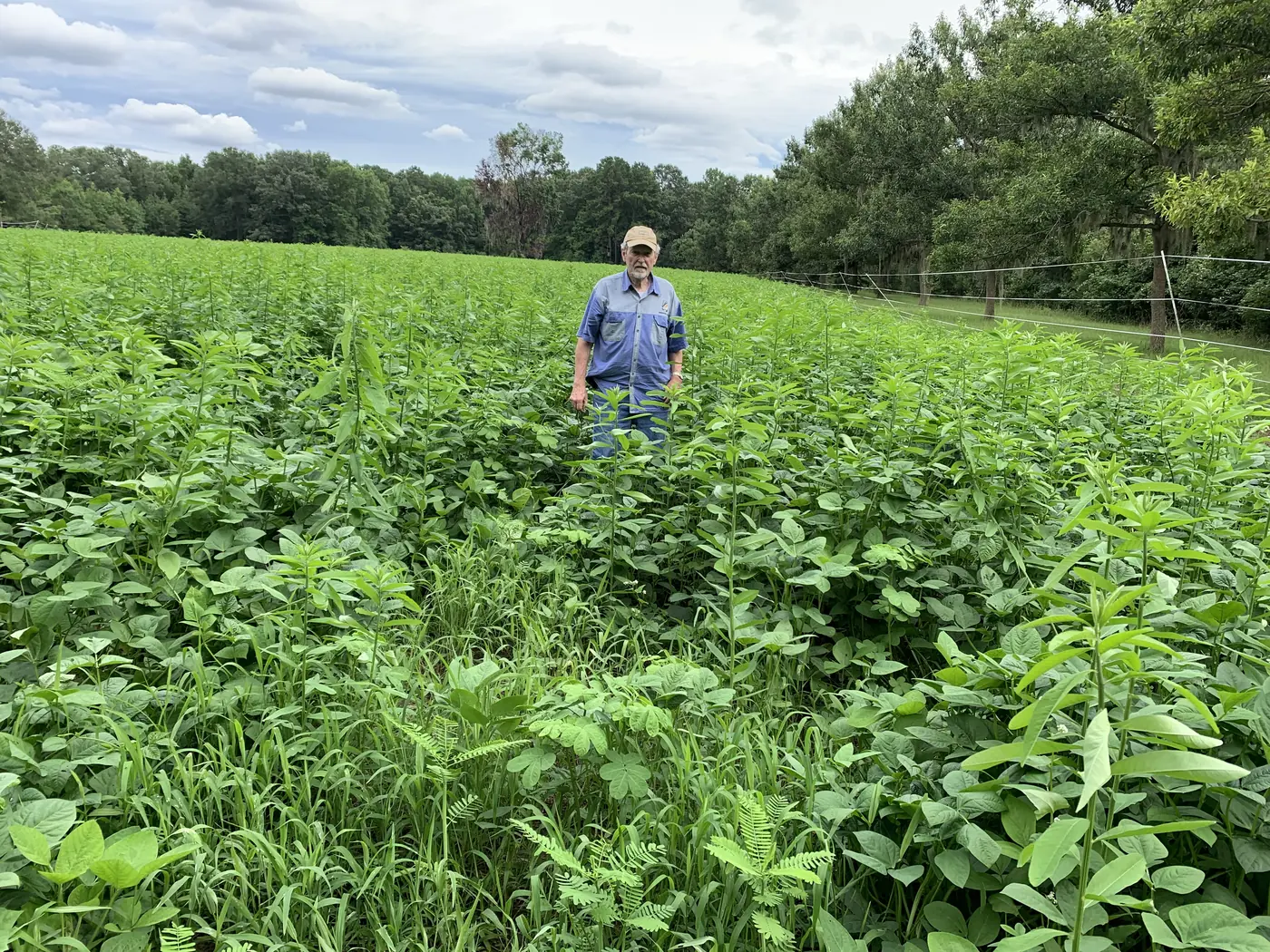
When should you plant clover for deer in South Carolina?
When should you plant clover for deer in South Carolina?
Plant clover in South Carolina from September 1 through October 15. The Mississippi State Deer Lab lists that window for white, red, crimson, arrowleaf and ball clover. Alabama Extension adds the rule that outranks any date: get seed down at least 45 days ahead of first frost.
September is the working month in the Lowcountry. Inside the window, soil moisture picks the day, so plant ahead of a rain. Our food plot establishment work drills those dates across Charleston, Colleton and Beaufort counties.
Clover earns its slot because it stays put. SCDNR makes the point plainly: once a food plot is planted, its location does not change and it is always available to the deer.
Which clovers hold up on Lowcountry ground?
Coastal Plain dirt runs sandy and acidic, and it stays hot deep into fall. Two groups handle it here: the grazing tolerant white clovers and the annual reseeders. Rates below come from the Mississippi State Deer Lab planting guide.
| Clover | Annual or perennial | How it does here | Rate per acre |
|---|---|---|---|
| White, ladino types | Perennial | Takes shade and moist ground, thinnest in late summer | 5 lbs broadcast, 4 lbs drilled |
| Crimson | Annual | Wants well drained sand, seeds out early | 30 lbs broadcast, 20 lbs drilled |
| Arrowleaf | Annual | Best reseeder of the group, needs well drained ground | 15 lbs broadcast, 10 lbs drilled |
| Red | Short lived perennial | Handles drier upland spots, acts annual this far south | 12 lbs broadcast, 8 lbs drilled |
| Ball | Annual | Grows where other clovers will not, takes poor drainage | 3 lbs broadcast, 2 lbs drilled |
Durana and Patriot are the white clovers worth asking for by name. Both were developed and released at the University of Georgia. They came from plants that had survived hot, dry summers under heavy grazing. UGA reports ladino stands failing after two to three years while those two hold.
Crimson and arrowleaf cover the annual side. Clemson Extension in Colleton and Hampton counties puts arrowleaf hard seed at 70 to 90 percent. That hard seed is what brings a stand back without a drill. Clemson also calls crimson red clover an annual well adapted to the warm climate of South Carolina.
Acid tolerance separates them too. The Deer Lab puts white clover at a soil pH range of 5.5 to 7.0. Crimson runs 5.5 to 7.5, and arrowleaf wants 5.8 to 6.8. Red clover is the short lived option. The National Deer Association notes that in the Deep South, red clover performs more like an annual.
What does clover need from your soil?
Start with a test, not a seed bag. The Clemson Agricultural Service Laboratory runs soil tests at $6 per sample. Clemson Extension puts the food plot target at a soil pH of 6.0 to 6.5. UGA says to lime white clover ground to a minimum pH of 6.0.
Below that line, fertilizer stops paying. Alabama Extension says a soil pH of less than 6.0 reduces nutrient availability in the soil. Lime is slow work: Clemson says it can take three to six months to raise soil pH.
Clover also needs its bacteria. UGA calls for Rhizobium inoculum type B on white clover seed where clover has not grown for several years. It puts the cost at about 10 cents per acre. That inoculant is what lets a vigorous white clover stand fix 100 to 150 pounds of nitrogen per year.
Most clover seed ships pre-inoculated. Alabama warns that seed coating can be 50 percent of the seed weight. One more caution for sandy tracts: UGA says white clover does well on lighter soils, but tells planters to avoid planting in deep sands.
How should you plant clover seed?
Depth kills more clover plots than seed choice does. UGA counts more than 750,000 white clover seeds per pound, so that seed has no reserve to push through cover. UGA caps seeding depth at 0.25 to 0.5 inch. The Deer Lab says cover white clover seed 1/2 inch deep and the annual clovers 1/4 inch.
A no till drill puts seed at that depth in one pass and uses less of it. The Deer Lab drills white clover at 4 pounds per acre against 5 pounds broadcast. UGA says to increase seeding rates by 25 percent if broadcast seeding methods are used. Broadcast seed still has to be pressed in, and Alabama says to use a cultipacker on small seed.
The seedbed matters as much as the tool. The Deer Lab is short about it: plant in a well prepared, firm seedbed. It also puts 200 pounds per acre of 0-20-20 on white clover at planting. Your soil test sets the real number.
A light nurse crop of oats or wheat helps a new stand. Alabama includes cereal grains in the initial planting for quick green up while the clover establishes. Keep that grain rate low, because UGA calls competition from companion grass the most common reason clover stands fail. Grain dates sit in our South Carolina fall planting calendar.
Which clover do deer prefer?
White clover carries the most days on the calendar. The Deer Lab calls it a great clover for providing quality deer forage most of the year. It produces well from October through June.
Red clover is the other preferred one. The National Deer Association says it is very attractive and preferred by deer compared to other forages. The Deer Lab lists red clover as preferred forage for deer, rabbits and turkeys.
Arrowleaf sits below both of them. The Deer Lab says arrowleaf clover is less palatable than some of the other clovers. Plant it for the reseeding it gives back.
Clover and brassicas feed different weeks of the season. Clover pulls deer from green up through spring, while brassicas wait on cold. Our rapeseed and brassica guide covers that late season half.
When is it too late to plant clover in South Carolina?
Count back 45 days from your average first freeze. National Weather Service normals for 1991 to 2020 put Walterboro at November 12. That sets an inland cutoff near the end of September. Charleston International averages November 27, so coastal plots can run into the middle of October.
Clemson frames the same deadline for crimson in plain words: late summer is the ideal time to plant so the clover can become established before the first hard freeze.
Past the window, late winter is the fallback. The National Deer Association frost seeds in the South in January and February. It uses 8 pounds per acre for white clover and 15 pounds per acre for red clover. Freeze and thaw cycles work small seed down to planting depth.
That trick leans on cold the Lowcountry does not get every year. UGA describes frost doing that job in far north Georgia. On our ground, broadcast onto short, bare dirt in February and drag it in.
Spring planting is the weakest of the three. UGA is blunt about it: spring plantings should be avoided in the Coastal Plain and Piedmont because of heavy grass competition with clover seedlings.
What does a clover plot need in year two?
A clover plot is a standing crop with a maintenance bill. Alabama Extension wants at least one mowing to a height of 6 to 8 inches in late summer. Weeds move in as the clover thins, so mow before they seed out.
Feed the stand on a schedule. Alabama puts clover plots at 300 pounds of 0-20-20 per acre a year, split between mid spring and early fall. Kept up that way, some clovers can produce for 3 to 5 years.
Annual clovers get a different pass. Clemson Extension in Colleton County mows standing clover from mid to late September through early October. Clemson also notes hard seed can increase by 40 to 60% during drought conditions, which is the plant insuring itself.
Extension guides also cover selective herbicides for grass inside a clover plot. Our part of the job is the mowing and the drill work.
The family plants and hunts its own plots on the family’s 327-acre tract in the ACE Basin each fall. Our hunting land management program runs plots and access on one schedule.
Getting clover in the ground this season
Clover pays off on the work done before the seed leaves the box: the soil test and the lime. We site plots where deer already move, and we drill small seed to depth.
Call or text (843) 696-7162, or start at the contact page. Estimates are free.